
CIOReview Europe Weekly Brief
Be first to read the latest tech news, Industry Leader's Insights, and CIO interviews of medium and large enterprises exclusively from CIOReview Europe
A featured contribution from Leadership Perspectives: a curated forum reserved for leaders nominated by our subscribers and vetted by the CIOReview Advisory Board.

Applus+ IDIADA
Building Resilient Teams for a Digital-First Future
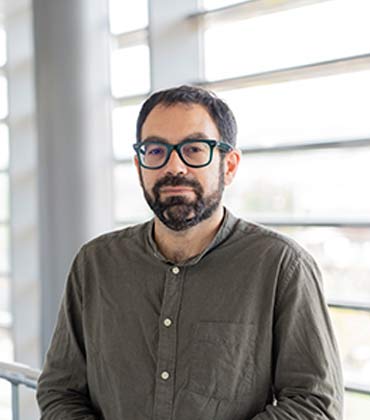
David Guerra Rodriguez
David Guerra Rodriguez is a seasoned software engineering manager with expertise in web and cloud technologies. Passionate about leading high-performing teams, he drives innovation, fosters collaboration, and delivers cutting-edge solutions that ensure growth, excellence, and lasting impact in the tech industry.
In an exclusive interview with CIOReview Europe, David Guerra Rodriguez shared his views on how software engineering and leadership drive business transformation.
Shaping High-Performance Teams
My journey from junior developer to leading software engineering teams at Applus+ IDIADA has been shaped by diverse experiences across academia, research, and industry. Starting as a PHP developer in 2002, I learned the importance of understanding technology from the ground up. Working on ERP systems showed me how business requirements shape technical decisions.
During my academic phase, teaching Programming Languages and Object-Oriented Programming, while pursuing research, deeply influenced my leadership philosophy. It reinforced the value of systematic thinking and mentorship, which I now implement through our alternating teacher-learner programs where senior architects pair with junior staff. Teaching also taught me that psychological safety is essential for learning and innovation. I strive to create environments where engineers can challenge ideas and learn from mistakes without fear.
At IDIADA, progressing from Software Engineer to manager revealed the necessity of structured flexibility. Leading the development of corporate services showed me that innovation requires both courage and safety nets. This led to our 70-25-5 technology portfolio approach, balancing proven solutions with calculated experimentation. My experience as Scrum Master and technical leader taught me that high-performance teams need both technical excellence and operational efficiency. Today, I focus on building hybrid teams that combine traditional engineering fundamentals with modern digital talent, creating resilient organizations capable of adapting to technological change while maintaining reliability.
Powering Transformation Through Software
Software engineering is transforming into a strategic business enabler rather than just a support function. Leading digital transformation at Applus+ IDIADA has shown me how the discipline is evolving beyond code development. The creation of our Corporate Data lake demonstrates this shift, as software engineering now orchestrates data ecosystems that drive real-time decision-making across departments.
The move toward cloud-native architectures and microservices has revolutionized business agility. Our migration to SAP and Salesforce is about more than adopting platforms. It enables modular, scalable systems that adapt quickly to changing requirements. This flexibility allows deployment of new features in days rather than months. Implementing our corporate CI/CD environment has further accelerated delivery, enabling continuous deployment while maintaining enterprise-grade reliability.
“Leading the development of corporate services showed me that innovation requires both courage and safety nets”
Cross-functional collaboration has become central to our approach. Through DevOps and platform engineering, we have broken down silos between development, operations, and business teams, creating shared ownership. This extends to learning sprints and architecture whiteboards, where technical and business perspectives merge to solve complex challenges.
The rise of AI and machine learning has elevated software engineering even further. We are not just building applications but creating intelligent systems that learn, predict, and optimize business processes. This requires engineers who combine technical expertise with business acumen, understanding that every line of code can directly influence business outcomes.
Adapting to Industry Shifts
The software industry faces disruption on many fronts. The most pressing challenge is balancing the speed of technological change with the stability enterprises require. At Applus+ IDIADA, we address this through our 70-25-5 portfolio strategy, keeping seventy percent proven solutions while systematically exploring emerging technologies. This enables innovation without sacrificing the reliability demanded by our automotive clients.
Cloud-native architectures present both opportunities and complexity. Leading our migrations to SAP and Salesforce while developing the Corporate Data lake has shown me that successful transformation requires organizational change management, not just technical expertise. We have restructured teams around DevOps practices to accelerate delivery while maintaining quality.
Talent evolution is another challenge. Skills become obsolete quickly, yet demand outpaces supply. I address this through learning sprints and mentorship programs where senior architects alternate between teaching and learning roles. This fosters continuous adaptation, essential for navigating technological shifts. We also hire engineers with non-traditional backgrounds who bring fresh problem-solving approaches.
Finally, the democratization of AI and machine learning is reshaping software engineering itself. We are moving from deterministic systems to adaptive, intelligent platforms. This shift requires rethinking methodologies, testing strategies, and even the definition of software quality, pushing us toward more iterative and experimental approaches.
The Next Wave of Software Innovation
In the next decade, enterprise software development will be transformed by artificial intelligence and the emergence of quantum computing. I expect AI to be integrated into every stage of the lifecycle, from automated code generation to intelligent testing and self-healing systems. Organizations must prepare by investing in AI literacy now, ensuring engineering teams can design systems that leverage machine learning effectively.
Low-code and no-code platforms will mature, democratizing application creation across business units. This will not diminish the role of engineers but elevate it. Engineers will move from writing code to orchestrating complex architectures and ensuring governance across distributed ecosystems. Organizations should start cultivating hybrid technical-business roles and governance frameworks that enable innovation while preserving quality.
Edge computing and distributed architectures will become central as IoT expands, particularly in automotive. The future lies in autonomous, self-managing systems that process data at the source. Preparing for this means investing in event-driven architectures and expertise in distributed design, something we have already begun through microservices initiatives.
Sustainability will also become a core engineering consideration. Energy-efficient algorithms, green coding, and carbon-aware computing will move from optional to regulatory. Organizations should start measuring the environmental impact of software now, embedding sustainability metrics into development processes alongside performance and reliability indicators.
Leadership Skills for Digital Success
Leading engineering teams today requires technical depth, strategic vision, and human-centered leadership. From managing fifty engineers across fourteen teams at Applus+ IDIADA, I have learned that technical credibility remains essential. However, the differentiator is synthesizing technical expertise with business acumen, understanding how architectural choices influence revenue, customer experience, and competitiveness.
The ability to create psychological safety while driving performance is fundamental. Engineers must feel empowered to challenge ideas, experiment, and occasionally fail without fear. Leaders must balance empathy with accountability, fostering environments where innovation thrives alongside operational excellence. My teaching background showed me that the best leaders remain perpetual students, combining humility with curiosity.
Strategic thinking goes beyond technology selection to talent development and organizational design. Future leaders must architect teams as carefully as systems, blending traditional engineering rigor with modern digital fluency. Recruiting for potential rather than just experience, and implementing structured learning programs, keeps teams ahead of technological change. Our mentorship model, where senior architects alternate between teaching and learning roles, exemplifies this mindset.
Most importantly, successful leaders must master ambiguity. They need to navigate between proven methodologies and experimental approaches, advocate for technical investment, and communicate in the language of business value. The ability to bridge engineering excellence with organizational strategy will define long-term success.
